
The (TTM) from the Principles and Foundations of Health Promotion and Education, is a theory created by Prochaska and DiClemente. They call this model the Transtheoretical Model of Change and discuss that,“people attempt to change their behavior, they move through a variety of stages using different processes to help them get from one stage to the next until a desired behavior is attained” (Cottrell, 2018, pg. 106). Prochaska lists out 5-6 different stages for effective behavior change to occur in this program: precontemplation, contemplation, preparation, action, maintenance, and termination.
According to The Center for Disease Control and Prevention, guidelines for Americans ages 18-64 describe physical activity as activities that keep people’s bodies moving and and works the skeletal muscles and cardiac muscle. (Center for Disease Control and Prevention [CDC], 2018). Activities include two forms of exercise; aerobic activity and muscle strengthening. Activities where the cardiac muscle is strengthened and muscles grow would entail bike riding, running, playing sports, and weight training.
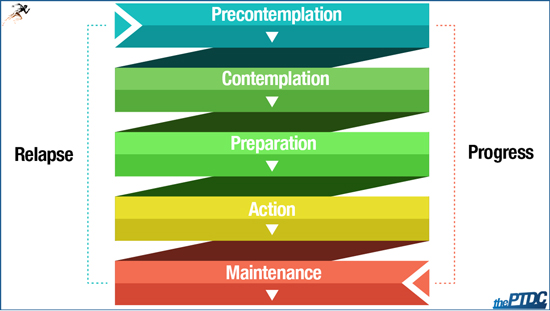
Within the stages of change, I believe I am still in the preparation stage. I have never made that full stride to make exercise a part of my life style and have been stuck in this stage for a while. I believe I am coming close to the action stage and can begin making exercise a part of my daily routine. I want continue exercising and see if I can be consistent to make healthy changes. Outweighing the pros and cons based on Proschange.com, I can see that I am making strides to exercising and begin making progress.
In terms of exercise, my decisional balance leads more towards a negative aspect of exercise. It is shown that I do have more cons than pros, but is not a large difference. Based on this I know I am in the early stage of preparation,but I will make my goal of meeting the 6 months of activity. This does correlate to my stage because I took such a long while of making exercise a priority.
The three processes of change I would identify with would be:
- Consciousness Raising
In this part of the change, this is where I increase my attention to healthy behaviors. I try to get my family to participate with me in getting healthy ingredients, food and snacks to keep in the house. I schedule times with dedicating time to exercise and make it a priority to do.
- Reinforcement
In this change, I align with this is because I give myself more reasons to believe exercise should be a key component to everyday life. Not just physically, but exercise helps with mental and emotional health.
- Self Reevaluation
During this part, this is where the new behavior is checked on, making sure the drive is still there. I have to look at this as a time to see where I am at with making healthy decisions. I need to evaluate the goals I made with myself and keep reminding myself the joy in exercising, the benefits that come with it, and my purpose to why I am exercising.
In times of emotional distress, this can lead to relapse and create unhealthy behaviors. My self efficacy levels were low in the areas where I make exercises. I was shown to do well in exercising when I am doing it alone. This is shown to be true because I go through the fear of being judged for where I am and not go at my own speed. I feel more comfortable working out by myself and think this will create more self motivation in exercising.
Throughout this process I have learned that I need to make a stronger effort in my approach to exercising. I have made excuses for a long time, but by changing my attitude to exercise, this has given me motivation to want exercise to be incorporated into my life.
Word Counter: 641
Reference:
Cottrell, R. R., Girvan, J. T., Seabert, D., Spear, C., & McKenzie, J. F. (2018). Principles and foundations of health promotion and education.
Physical Activity. (2018, September 07). Retrieved from https://www.cdc.gov/physicalactivity/index.html


 Rakin's Health Blog