A Career In Advocacy

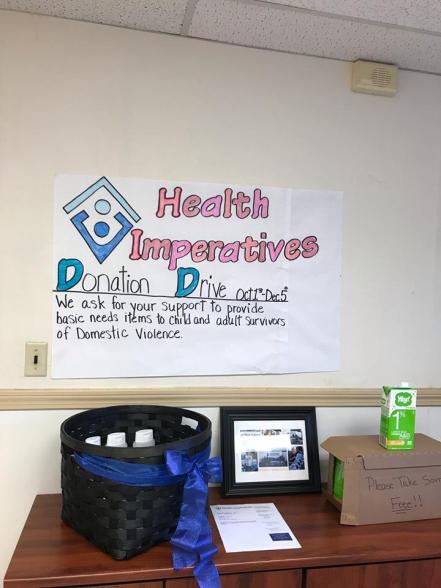
Health Imperatives is a non-profit company that serves the south shore area in domestic violence and sexual assault. The person I worked with was Elissa May who works as the volunteer coordinator.


942 W Chestnut St,

Brockton, MA 02301


  1.    What?

-What happened?

Elissa May introduced me to the team who work with different backgrounds. Advocates ranging from victims working with immigration, to victims who align with LGBTQ come here for services. Learning their roles.

-What did you observe,hear,

Learning about the advocates and their personal reasons to join this non-profit was inspiring. I always see how respectful everyone is to one another and it felt good seeing a positive environment for this advocacy.

What did you do?

Elissa May works with volunteers who are the main fuel to help run this non-profit. I participated in giving out brochures for an event and did my best to direct people with information needed. I also helped around the office with organizing later events and setting up.

-What health issue is being addressed and what population is being served?

The main health issues that this organization assists in is psychological trauma. Most people in the community come here looking for direction and access to resources.

Interview:

* What training and education on health behavior theory and models was included in  

  your job training/education?


In Health Imperatives they use general models when finding a plan of action for assisting patients. By assessing the people and ask questions, they can help find resources for intervention that can help out. Health imperative advocates will follow up with people to further make sure they are in the right path.

*What was your preparation/training for this field/job?


Talking to Elissa May, currently goes to graduate school and is working here at Health Imperatives to get hands on experience. Every advocate here had to go through different training for certifications as a standard. This is important for every advocate, volunteer, and administration worker here because it is an environment where respect and understanding towards others take place.


* How has this training or lack of training impact your day-to-day interactions and

activities with your clients?

Elissa says within a short period of time of being here and going through all the training has made her more aware and informed of what the victims go through. Knowing how crucial it is to gain the trust of the people who come here, it is important that we all can create a positive environment for others.


So What?

-Did you learn a new skill or clarify an interest?

I learned how to be more mindful of the people in my environment. It made me more aware of my understanding on what people go through. The time I spent here has made me feel more passionate about pursuing to become an advocate. Advocates have the skills to help others and either find or create resources for those in need.

-What did you like/dislike about the experience/setting?

I liked how everyone who works here was very welcoming and always open to help with understanding the purpose and mission of their non-profit. For me personally my experience here did feel intimidating knowing how sensitive and extreme situations can be for all kinds of people. I personally would feel overwhelmed knowing I would have to keep staying positive and as helpful as I can be.


– What are some of the pressing issues/needs of the community/population served?

The main office is located in Brockton, MA and is in a convenient location for anyone to go to. They serve anyone in the south shore area who faces some form of domestic violence and sexual assault. Anyone who needs assistance in finding resources and getting the right help to help themselves, this is an environment they can come to.


Now What?

-How can you apply this learning?

Being here momentarily made me want to learn more about advocacy. I want to learn more about community work and knowing more about advocacy work in communities inspires me to learn more on what I can do to make a difference in the communities. In a model plan of action, I want to use what I learned from this non-profit and apply it to other works.

-What would you like to learn more about, related to this project or issue?

I want to learn more about other forms of resources to help people in the community relating to this issue. I would also like to be involved in more nutrition based non-profits where they combat malnutrition and hunger. I want to use what I learned being with Elissa, and hope I can learn more about volunteering other programs in the area.

-If you could do the volunteer work again, what would you do differently?

If I could do the volunteer work again I would like to be more involved with helping people who come in and assist them on anything they need. I also would like to learn more about the organizing process of the non-profit and learn more about the advocacy aspect of working here.
health imperatives

Career Shadow

The owner of this facility is  Dr. Eugene R. Boeglin. It is located in Milton, MA. This is a suburb off of Boston.

191 Blue Hills Parkway

Milton, MA, 02186

Milton Orthopaedic & Sports Physical Therapy

  1.    What?

What happened?

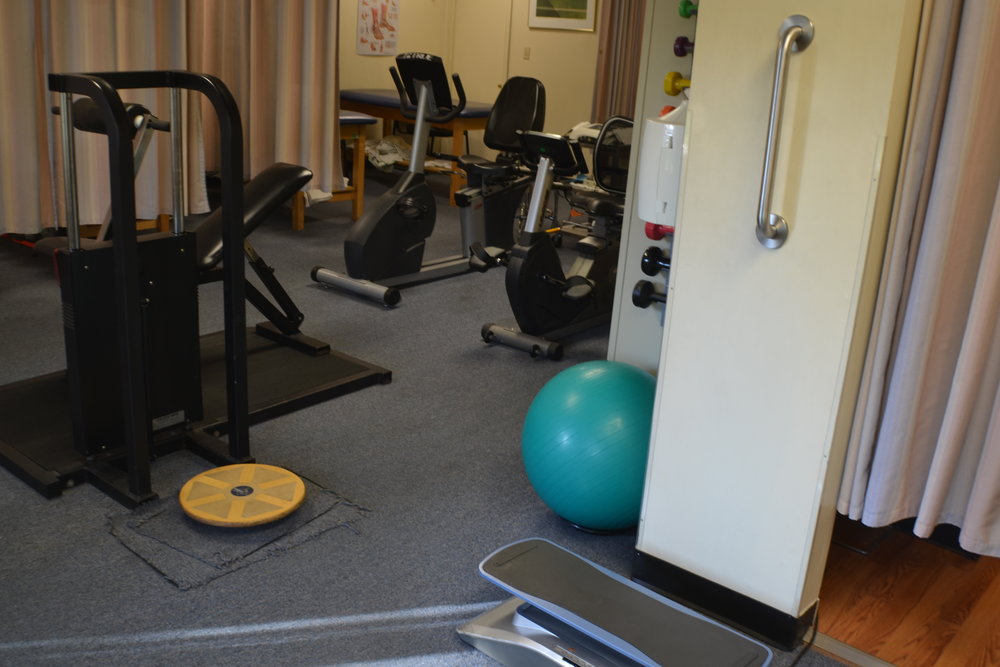
Dr. Eugene allowed me to shadow for a day and was nice enough to show me around. He first explained to me the purposes of each machine and the benefits it gives. While he had to take care of patients he showed me the administration aspect of his office and during the time I gave a hand to the admin person.

What did you observe, hear,

When I was with the doctor, he would show me some exercises the patients did. I noticed he focused on making sure the patients were comfortable and tried to give the the confidence to perform the exercise. The office seemed like a small gym to me and it came as a surprise because I have never seen a doctors office like this.

What did you do?

Dr. Eugene allowed me at one point to interact with the patients. I was able to talk to the patients and ask about some problems they are going through. It was a great experience getting to the personal level with the patients, which is an important skill to have to better assist.

What health issue is being addressed and what population is being served?


The health issue that is being addressed is rehabilitating bone or muscle injuries. Dr. Eugene says because he deals with a lot of people who went through an injury, he deals with mostly injured student athletes or the elderly.

Interview:

*What training and education on health behavior theory and models was included in

your job training/education?

Dr. Eugene explains he has been learning health theory models all throughout his years in school. When he got first hands experience was during his residency when he shadowed other physical therapists. He talks about how he would not have a good grasp on implementing theory models without having hands on experience.

*What was your preparation/training for this field/job?

Alongside certifications, most of the experience came from working with other therapists and working closely with how they operate their everyday routines. It was hard at first especially in the beginning because no matter how much you learn, working with patients is a whole different obstacle. Through years of experience and learning to work with patients, it becomes easier to do work.

* How has this training or lack of training impact your day-to-day interactions and

activities with your clients?

Dr. Eugene is very comfortable with all his patients and makes all of them feel welcomed. Having years of experience and learning through experiences hands on, he is able to enjoy and be passionate with his work and provide exceptional service to all his clients.

So What?

-Did you learn a new skill or clarify an interest?

During my time here, I learned that it is important to have good communication and interaction skills with patients. In a clinical setting it is important to be more personal with care because this will allow better understanding on how the practitioner can help.

-What did you like/dislike about the experience/setting?

I really enjoyed the fact this was Dr. Eugene’s private practice. The office was located inside a home of a suburban town. I think it makes it more of a home feel having locals come by and make a difference in a community.

– What are some of the pressing issues/needs of the community/population served?

Because the Dr has his office in a convenient location for the locals, it eliminates long driving for exceptional care. Especially since it serves mostly students and elderly, it makes sense for it to be local so it is easily accessible.

  1. Now What?

– How can you apply this learning?

In healthcare I am most interested in doing community work and creating program plans to serve a need. During my time here my experiences have shown me how important it is to understand the community and get in a personal level to better help.

-What would you like to learn more about, related to this project or issue?

I

 understand that Physical Therapy is mainly for people who go through injuries, but seeing the exercises performed and the importance of stretching, I feel like more people in general need physical therapy. I would like to learn more about what exercises and stretches will help people’s health long term.

-If you could do the volunteer work again, what would you do differently?

If I could do the volunteer work again I would like to learn more about how the Doctor runs the office. I like how this was his self practice and wanted to understand the skills it takes to manage a clinical office.


milton ortho

Internet Evaluation

1200px-US_CDC_logo.svg

Currency of the information

The information on this web page was published and revised in September 8, 2016. On the web page all of the information is derived by current findings. This site is still accessible and more information can be found accessing the CDC database.

Relevance of the information

This information is relevant because it is informing people in general on educating healthy eating. The information is not overbearing and is organized so viewers no what they are reading and understand it. Coming to this source, I immediately knew the CDC is a credible source because they are an agency that makes a large impact in our public health. I felt this website was appropriate to my research because not only does it lay out information for my program, but it can lead me to other information relating to the same topic.I would be comfortable using this source in my research paper because it is a valid source and gives me new health insight I can use for information provided in my program.

Authority of the sources

This site does not specify who wrote the information or provide direct sources. Because it comes from the CDC, they are already regarded as a valid public health source of information. The site does say they did get their information and knowledge mostly from the Division of Nutrition, Physical Activity and Obesity. Also from the National Center for Chronic Disease Prevention and Health Promotion.

Accuracy of the information

Even though the information comes from the Division of Nutrition, and the National Center for Chronic Disease, it does not display evidence directly onto the site for people to view. I believe by looking at the information they used, they expect the users to look into the evidence and see if it is valid. Both sources they use are valid sources for Public Health knowledge. The information is unbiased and its only purpose is to inform people on healthy nutritional tips. The site has no spelling, grammar, and typo errors.

Purpose of the information

The purpose of this information is to just inform people on nutritional eating, but gives helpful tips on what behaviors to take away and what new methods of eating healthy are discovered. While the information is meant to be informative, it does try to persuade readers to adopt these nutritional understanding and push people to look more into nutrition education. All the information provided is factual and nothing is opinionated, and its purpose to teach people is clear in its display of tips.

Perception of the information

I did feel the information was accurate and reliable to use, but after going through the checklist, my confidence with this being a reliable source of information to use for a research paper did go down. Even though I can browse through the site I realize it is only meant to skim the surface when discussing my program, and sources that the site discusses should be the ones used.

The way I would use this information for a research article or course assignment is to use it not to detail out program information, but as a reference mentioning tips or suggestions used. It can be used as an example of tips I would give to people to educate themselves on healthy eating.


Word Counter: 560 words


Control And Prevention, C. D. (2016). Healthy Eating for a Healthy Weight. Center for Disease   


      Control and Prevention. Retrieved from  
      https://www.cdc.gov/healthyweight/healthy_eating/index.html.

Research Article Evaluation

Food store access and household fruit and vegetable use among participants in the US Food Stamp Program

Researchers: Donald Rose and Rickelle Richards


This is a survey analysis on a population where they find a correlation between the distance people live from grocery markets and people who have access to food stamps. Surveys show that people did increase their intake only when grocery stores were of walking distance and with food stamps take the burden away of buying healthy food.

The database I used was Google Scholar.

Going into the database, my aim was to search for an article that was related to Nutritional health. Issues or challenges that I encountered was that my searches were too abstract because many kinds of articles came up relating to nutrition. At Least this allowed me to explore different nutrition topics I want to look into. Afterwards I narrowed my search to a more specific population and looked into articles that provided surveys and analysis on the population regarding access to Nutritious food.

Based on the components of a research article. For me I was a bit confused how the article was being introduced. At first it was discussing a past experimental survey done in the 1980s so right away I can identify this was a secondary source. Not until later did the article transition to researchers who want to replicate the same survey into today’s population.

A specific use or practical application this article can be used for is to create an intervention plan to help a community with nutrition access. Based on the article’s data about different communities that have different levels of access to food nutrition, we can determine if the chosen community matches with the variables presented in the data collection. Based on that, now we can focus more on the plan of action and figure out methods in which food accessibility can be created. This information would help develop nutritional education to patients who lack the knowledge of understanding proper nutrition. This information can be applied to a windshield tour which is a specific course assignment. With the information people can tour through communities and observe different traits that make the article’s findings true.

Rose, D., & Richards, R. (2004). Food store access and household fruit and vegetable

           use among participants in the US Food Stamp Program. Public Health      Nutrition.                   

             Retrieved from     

            https://www.cambridge.org/core/services/aop-cambridge-              core/content/view/E828E1DEFB6E058FF996C1A97F02F08A/S1368980004001399a.pdf/food_store_access_and_household_fruit_and_vegetable_use_among_participants_in_the_us_food_stamp_program.pdf.


Health Video Blog (IMB) Model

The information motivation behavior skills model indicates people need behavior skills to engage in preventative behavior. This model comprises of understanding information, creating motivation, and learning new behavior skills  (Cottrell, Girvan, Seabert, Spear, McKenzie, 2018). For our healh video we have selected looking into sexual behavior. We believe the (IMB) model would be perfect for this health problem because a lot of the behaviors stated from the textbook indicates that these behaviors are preventable. Based on the model for the intervention process to work first information needs to be understood, then from there motivation on the behavior change develops, and then the person learns new behavior skills that help with health issue and make sure it does not occur or repeat. 

In our video my partner and I decided to go with a cartoon skit. In the skit the roles are a doctor and a patient. The doctor examines the patient by asking questions on the patients knowledge about sexual behavior. In the first construct the doctor informs the patient on the different risk factors that come from unsafe sexual behaviors. Issues such as chronic diseases can occur and while most can be treatable at an early stage, others are often left undetected. After the patient realizes this information, the patient undergoes the second construct where motivation is created. The patient realizes the severity of not knowing a lot about sex and has the drive to learn more. The patient says, “How can I protect my self doctor?”. This gives the doctor the opportunity to teach the patient skills to protect them selves  which is the third  construct where behavior skills are attained. In the video as an example the doctor chooses to discuss the importance of wearing a condom. If the condom is put on incorrectly then breakage can occur leading to the risk of sperm exposure and getting an STI. Another skill the doctor discusses is learning to better communication when it comes to sex. It is important to know about your partner’s sexual background because your main priority should be protecting your self. At the end of the video the patient thanks the doctor and the doctor tells the patient to come back for a follow-up appointment. The purpose of the follow-up is to make sure the patient is on track to making the behavior change and see the impact it has made on their health.

Overall, I enjoyed working on this project it was a struggle at first because I went with the approach of talking to BSU students. Even though we decided to go with a cartoon skit, a lot of our ideas came from talking to BSU students because I learned that a majority of students are not well informed about preventative measures on sexual health. This gave us the idea to work on preventative measures on sexual behavior and make it into a skit. I do wish the video could have been made longer because there is so much more in this model to discuss especially for our example with the doctor and patient.

Word Count: 510

Cottrell, R. R., Girvan, T. J., Seabert, M. D., Spear, C., & McKenzie, F. J. (2018).

     Principles and foundations of health promotion and education (7th ed). Glenview, IL:

Pearson Education Inc.


7284906-doctor-examining-patient-cartoon

SEP and TPB health model

Social-Eco-Model

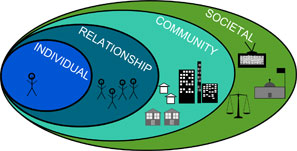
The SEP theory is a multilevel, interactive approach that examines how physical, social, political, economic, and cultural dimensions influence behaviors and conditions (Cottrell, Girvan, Seabert, Spear, & McKenzie, 2018). The levels of influence include: intrapersonal, interpersonal, organizational, community, public policy, physical environment, and culture.

For this model, I would apply it to seatbelt use and understand the influence it has in all levels. In the intrapersonal level, I understand that a seatbelt can save lives and influences my decision to wear a seatbelt. While I saw it as an unnecessary restraint, I always remind myself what it can do to save my life. In the interpersonal level, I have always grown up with my parents enforcing the seat belt rule. Because my parents would never start the car until I buckled my seatbelt, it has conditioned me to understand the importance of wearing a seatbelt. In the organizational community, town RMVs have flyers and posters showing the importance of wearing seatbelts. Local ad campaigns and signs on streets also broadcast the importance of seatbelt use. In the public policy level, it is now a law that anyone who operates a vehicle must wear a seatbelt or else they will get a ticket. Police are allowed to give you a ticket for a violation of not wearing a seatbelt. As for the physical environment, most new cars now have alarms if you are not wearing a seatbelt. Even if you are against wearing seat belts, it is not worth hearing the car alarm go off while you are driving, making people have no choice but to wear a seatbelt. It is a great new feature and has helped emphasizing the importance of wearing a seatbelt.

0_Mbfi83zPXpiSAT3D

The next theory to scope into is the (TPB) Model. The behavior I decided to look into is the habit of smoking cigarettes. Most of my family members are chain smokers and that has become part of their lifestyle. With friends, I have noticed most associate smoking with other unhealthy behaviors like drinking. Also, alternative forms of smoking such as juuling has become a large issue because young people believe this is a “healthier” alternative. The majority who smoke understand the consequences of smoking, and either do not care or turn a blind eye to what it can do to your body in the long term. For this I have spoken to my father, sister, and three of my other friends to get a diverse pool of people. Speaking with all five participants, there is definitely a correlation of some forms of guilt and understanding that smoking was not a good thing for your health. While that was unanimous, when it came to asking if there are safer ways to smoke, the responses would vary: where my Dad felt smoking was smoking, my sister felt juuling was safer because of no carcinogens, and my friends all agreed that juuling, while it may not have the same kind of smoke, is a lot more addictive than cigarettes. Doing this survey has made me understand the roots of smoking addiction, and that there is no safer way to smoke. By quitting the behavior and believing it is bad for you without alternatives, then the better off everyone will be.


Cottrell, R. R., Girvan, J. T., Seabert, D., Spear, C., & McKenzie, J. F.  (2018). Principles

        and foundations of health promotion and education. NY, NY: Pearson.


Word Counter: 539 words

TTM (Exercise)

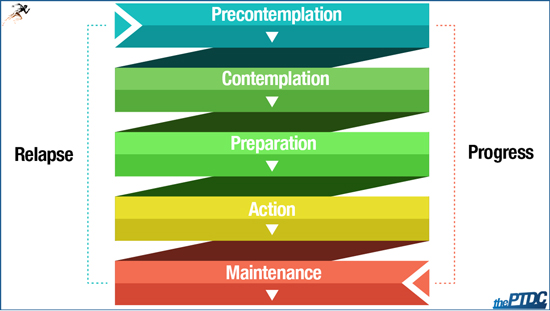
The (TTM) from the Principles and Foundations of Health Promotion and Education, is a theory created by Prochaska and DiClemente. They call this model the Transtheoretical Model of Change and discuss that,“people attempt to change their behavior, they move through a variety of stages using different processes to help them get from one stage to the next until a desired behavior is attained” (Cottrell, 2018, pg. 106). Prochaska lists out 5-6 different stages for effective behavior change to occur in this program: precontemplation, contemplation, preparation, action, maintenance, and termination.

According to The Center for Disease Control and Prevention, guidelines for Americans ages 18-64 describe physical activity as activities that keep people’s bodies moving and and works the skeletal muscles and cardiac muscle. (Center for Disease Control and Prevention [CDC], 2018). Activities include two forms of exercise; aerobic activity and muscle strengthening. Activities where the cardiac muscle is strengthened and muscles grow would entail bike riding, running, playing sports, and weight training.

Picture1-1                                  

Within the stages of change, I believe I am still in the preparation stage. I have never made that full stride to make exercise a part of my life style and have been stuck in this stage for a while. I believe I am coming close to the action stage and can begin making exercise a part of my daily routine. I want continue exercising and see if I can be consistent to make healthy changes. Outweighing the pros and cons based on Proschange.com, I can see that I am making strides to exercising and begin making progress.

In terms of exercise, my decisional balance leads more towards a negative aspect of exercise. It is shown that I do have more cons than pros, but is not a large difference. Based on this I know I am in the early stage of preparation,but I will make my goal of meeting the 6 months of activity. This does correlate to my stage because I took such a long while of making exercise a priority.

The three processes of change I would identify with would be:

  1. Consciousness Raising

In this part of the change, this is where I increase my attention to healthy behaviors. I try to get my family to participate with me in getting healthy ingredients, food and snacks to keep in the house. I schedule times with dedicating time to exercise and make it a priority to do.

  1. Reinforcement

In this change, I align with this is because I give myself more reasons to believe exercise should be a key component to everyday life. Not just physically, but exercise helps with mental and emotional health.

  1. Self Reevaluation

During this part, this is where the new behavior is checked on, making sure the drive is still there. I have to look at this as a time to see where I am at with making healthy decisions. I need to evaluate the goals I made with myself and keep reminding myself the joy in exercising, the benefits that come with it, and my purpose to why I am exercising.

In times of emotional distress, this can lead to relapse and create unhealthy behaviors. My self efficacy levels were low in the areas where I make exercises. I was shown to do well in exercising when I am doing it alone. This is shown to be true because I go through the fear of being judged for where I am and not go at my own speed. I feel more comfortable working out by myself and think this will create more self motivation in exercising.

Throughout this process I have learned that I need to make a stronger effort in my approach to exercising. I have made excuses for a long time, but by changing my attitude to exercise, this has given me motivation to want exercise to be incorporated into my life.

Word Counter: 641


Reference:

Cottrell, R. R., Girvan, J. T., Seabert, D., Spear, C., & McKenzie, J. F. (2018). Principles and foundations of health promotion and education.

Physical Activity. (2018, September 07). Retrieved from https://www.cdc.gov/physicalactivity/index.html

change-ahead_compressed

Social-Worker-Transtheoretical-Model

Steps to better Heart Health


240_F_80087192_7TWesX0zEDkMaeUCG04B0j0aBQKbqBEnHeart health is a major component to ensuring a long sustained life. According to the CDC, 610,000 people die of heart disease in the United States every year–that’s 1 in every 4 deaths (2017). Heart disease is the leading cause of death for both men and women. Heart health is not only a concern here in the United States, but all over the world.
Seeing this alarming statistic and looking into my own life experiences dealing with heart health, I can distinguish the self-susceptibility,severity. Seeing the impact it has in my family, I am able to address from my perception the threat this poses to my own health problems (Cottrell, 2018).

Because of this, my cue to action includes: family health, friends influence, and education on proper nutrition. These influences has pushed me to want to make changes to my heart health and make the effort to change my life style.

Looking into the perceived susceptibility/ severity, I am able to identify that my family’s heart issues can be seen as a genetic problem because not only my grandfather died of a heart disease, but many other family members I know suffer heart disease. My dad had to get a cyst placed on his heart. He almost suffered a heart attack, but luckily he survived. Seeing how much this impacts my family, I am worried that I will be drawn to this fate if I do not take measures and steps. Luckily we have methods that prevent heart disease through eating heart healthy meals and regular cardiovascular exercises.

This severity alarms a perceived threat in which if i do not follow proper heart health guidelines, I will most likely follow the same path as most of my family members. Not only genetics, but just not making the effort to ensure my heart strength, I am increasing my chances of heart disease.

Looking into the intrapersonal level of eating a heart healthy diet, I can understand that it is my own doing whether or not I can live on being healthy. If I continue with the behavior that I am invincible and just leave fate to let what happens to my life, then I will inevitably be lead to many health problems later on in my life and suffer. To change my behavior I need to face reality and understand the impact it has on my family and understand why they were not able to prevent it. Speaking with a lot of my relatives who reside in Bangladesh, a lot of them face the obstacles of not understanding what to do for their heart health. Basic steps of preventative measures was the only way to help themselves at the time such as taking walks, cut down on salt intake, and stay away from fried food. For them, education was their barrier so clearly I have no excuse to not take measures for myself. I need to be more proactive with reading nutrition labels, know what I am putting in my body and find nutrients to consume that is good for heart health. Aside from eating healthy, I must also make an effort to exercise regularly. Just simply taking thirty minutes of my day and be active can do so much for heart strength.

Word Count: 541

References:

Cottrell, R. R., Girvan, J. T., Seabert, D., Spear, C., & McKenzie, J. F. (2018). Principles and foundations of health promotion and education(7th ed.). NY, NY: Pearson.

Heart Disease. (2017, November 28). Retrieved from https://www.cdc.gov/heartdisease/facts.htm

Health Education Interview

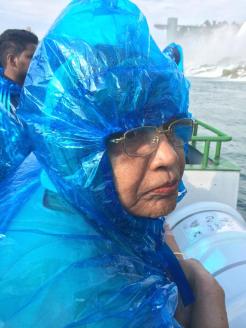
1660216_10202487342446062_2466584971351814873_nI have always been close to my family and love embracing the chance to stay in touch with my roots. I enjoy being able to see them in Bangladesh whenever I have the chance to visit them. My grandma and I have remained best friends ever since I was young. She is currently 72 years old and became a citizen of the United States of America in 2014. We always end up having long-winded talks about what is going on with this world, giving a chance for different ideologies and values to collide.
I wanted to take this opportunity to learn about my grandma’s healthcare past. This was my chance to discover what health education was offered for her in Bangladesh in comparison to the health education she receives here in the United States. She began by emphasizing that while her schools did provide ample information on health education, she mainly had to gain most of her knowledge from her family. She explained that in her time, everybody’s biggest concern was water contamination. From a very young age, her family always taught her the importance of staying away from pipe water, and the dangers associated with it. If she ever needed water to drink or to bathe in, she would have to go through the process of boiling the water over fire first, just to be safe. This came as a shock for me to learn about, because growing up, I was never concerned about accessing fresh water. It was a privilege I always overlooked. Following up on this topic, I proceeded to ask what other information she was given in regards to the attention of water. She explains that her teachers and parents emphasized being clean by regularly bathing and washing their hands. She felt it was important that schools taught this useful information to children, considering many kids would come to school covered in filth and dirt.

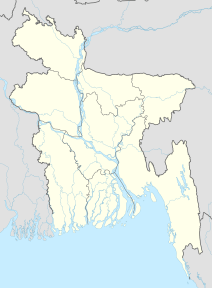
Transitioning, I turned my attention to diet habits, and started asking my grandma more nutrition-related questions. This is where she had the most difficult time explaining if she got any forms of education in regards to it. Back in her time, eating was more centered around survival and cost efficiency. Most people ate rice and fish as their regular form of diet. She recalled how in grade school, teachers always associated food items to what body part it was good or vital for, but consequently, never received education on how to balance vitamins and nutrition. She also discusses that programs to promote exercise was not provided by the government or the school system. Children did play outside, but most did not understand the importance of incorporating physical exercise into the balance of their life. She elaborated by mentioning  that she noticed more programs are slowly growing in the cities, and sincerely wishes these kind of programs were available during her time.2000px-Bangladesh_adm_location_map.svg

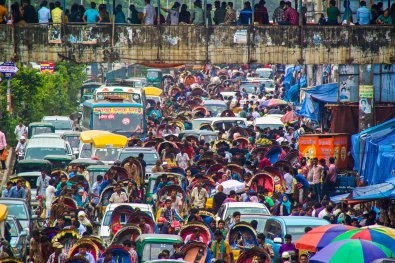
Lastly, I interviewed my grandma on what differences she has noticed in modern day United States health education versus Bangladesh health education. The main difference she spotted was the medium in which health education is spread. She mentioned how she notices a lot of advertisements on TV bringing up ad campaigns on eating healthy and exercising. In Bangladesh, health education is passed on via word of mouth. Children mostly listen to what their families and friends have to say in regards to it. In her opinion, this is not necessarily a bad thing, although she admits that it contributes to a lot of people not having a clear understanding on what behaviors are healthy and what behaviors are not healthy. She also sees a huge difference in urban life, where in Dhaka (capital city of Bangladesh), there is an immense amount of pollution, which many people are not aware of. She hopes one day, Bangladesh can grow their efforts to cut down on pollution. Overall, my grandma agrees that public health education is severely important in order for the most people live healthy lives, regardless of where they live.

Word Count: 669 Words

dhaka+bangladesh+new+market+traffic-2.jpg


The Path to Becoming a Health Educator

I originally started my education on the Pre-Med track, with the intention of wanting to pursue a career where I can help people and promote healthier lifestyles. Growing up, I always had an interest in the health sciences, but what really made me interested in Public Health studies specifically was the class Micro-Biology. Learning about different kinds of bacteria and how important they are in Public Health directed me to target my approach in learning about healthcare to this area. More specifically, going forward, I want to learn about how to manage a population by reducing the risk of a disease outbreak. Learning through different student experiences by working in the community, I grew an interest in healthcare measures outside of medicine.

bacteria
Bacteria

Many people have the misconception that health only relates directly to the physical aspect, but I learned through studies that health is a very multi-faceted concept on different levels. Health, according to me, is defined by the optimum level one can be with their mental, emotional, physical and social well-being. In the textbook, Principles and Foundations of Health Promotion, researched by Professors Cottrell, Girvan, Seabert, Spear, and McKenzie, they define Health Education as “any combination of planned learning experiences using evidence based practices and/or sound theories that provide the opportunity to acquire knowledge, attitudes, and skills needed [to] adopt and maintain healthy behaviors” (3). The process of becoming a health educator means: retaining the knowledge of the different methods and possibilities, having the ability to apply it in a professional manner to a variety of situations, and then coming up with reasonable solutions to help others.

I personally wanted to learn more about other methods of healthcare and discover the many possibilities that are out there for me. I am most interested in pursing health education by experiencing working with non-profits and learning how all the different government policies play key roles in peoples’ lives. As I learn more about the multitude of aspects of health education, I have become passionate to teach others, as well as build a foundation so that it can be passed along to help others. I believe if we all work together in society as a community, we can truly make a difference in bettering everyone’s overall health. In the textbook, they discuss the determinants in society to be, “conditions in the environment in which people are born, live, learn, work, play, worship, and age that affect a wide range of health, functioning, and quality of life outcomes and risks” (17). Reviewing these determinants, it can be highlighted that our environment is the key factor for society’s overall health.

I believe that the main key to making our communities healthier is developing the environment people live in. This would be best achieved by working together to create the resources needed, and ideally having the ability to educate others about a healthier lifestyle.  In the textbook, they define primary prevention as comprising “those preventive measures that for stall the onset of illness or injury during the prepathogenesis period (before the disease begins)” (18). In my opinion, this is the best way to make a larger impact in society, because it creates a good plan of action for the populations within communities, states, and our country in general.

evol_pub_health_seriesBy going this path I feel more confident I can make a change and a difference in the world someday. I would personally love to continue working with more non-profits in the future and experience more interactions with different kinds of people. My vision for the future is to become a voice, a strong health advocate, and have the power to grow communities.

Reference:

Cottrell, R. R., Girvan, T. J., Seabert, M. D., Spear, C., & McKenzie, F. J., (2018). Principles and Foundations of Health Promotion and Education (7th Ed). Glenview, IL: Pearson Inc.

Word Count: 608