
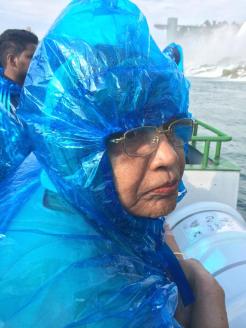
 I have always been close to my family and love embracing the chance to stay in touch with my roots. I enjoy being able to see them in Bangladesh whenever I have the chance to visit them. My grandma and I have remained best friends ever since I was young. She is currently 72 years old and became a citizen of the United States of America in 2014. We always end up having long-winded talks about what is going on with this world, giving a chance for different ideologies and values to collide.
I wanted to take this opportunity to learn about my grandma’s healthcare past. This was my chance to discover what health education was offered for her in Bangladesh in comparison to the health education she receives here in the United States. She began by emphasizing that while her schools did provide ample information on health education, she mainly had to gain most of her knowledge from her family. She explained that in her time, everybody’s biggest concern was water contamination. From a very young age, her family always taught her the importance of staying away from pipe water, and the dangers associated with it. If she ever needed water to drink or to bathe in, she would have to go through the process of boiling the water over fire first, just to be safe. This came as a shock for me to learn about, because growing up, I was never concerned about accessing fresh water. It was a privilege I always overlooked. Following up on this topic, I proceeded to ask what other information she was given in regards to the attention of water. She explains that her teachers and parents emphasized being clean by regularly bathing and washing their hands. She felt it was important that schools taught this useful information to children, considering many kids would come to school covered in filth and dirt.
Transitioning, I turned my attention to diet habits, and started asking my grandma more nutrition-related questions. This is where she had the most difficult time explaining if she got any forms of education in regards to it. Back in her time, eating was more centered around survival and cost efficiency. Most people ate rice and fish as their regular form of diet. She recalled how in grade school, teachers always associated food items to what body part it was good or vital for, but consequently, never received education on how to balance vitamins and nutrition. She also discusses that programs to promote exercise was not provided by the government or the school system. Children did play outside, but most did not understand the importance of incorporating physical exercise into the balance of their life. She elaborated by mentioning that she noticed more programs are slowly growing in the cities, and sincerely wishes these kind of programs were available during her time.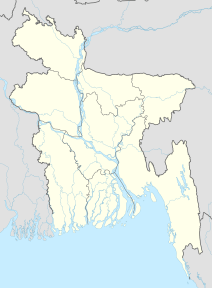
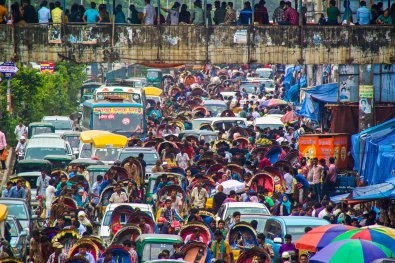
Lastly, I interviewed my grandma on what differences she has noticed in modern day United States health education versus Bangladesh health education. The main difference she spotted was the medium in which health education is spread. She mentioned how she notices a lot of advertisements on TV bringing up ad campaigns on eating healthy and exercising. In Bangladesh, health education is passed on via word of mouth. Children mostly listen to what their families and friends have to say in regards to it. In her opinion, this is not necessarily a bad thing, although she admits that it contributes to a lot of people not having a clear understanding on what behaviors are healthy and what behaviors are not healthy. She also sees a huge difference in urban life, where in Dhaka (capital city of Bangladesh), there is an immense amount of pollution, which many people are not aware of. She hopes one day, Bangladesh can grow their efforts to cut down on pollution. Overall, my grandma agrees that public health education is severely important in order for the most people live healthy lives, regardless of where they live.
Word Count: 669 Words
 Rakin's Health Blog